


How to clean blinds after a dusty Hawkesbury summer
After a long, dry Hawkesbury summer, it does not take much for dust to settle into every part of your home. Blinds are often one of the first places it becomes noticeable, particularly around windows, sliding doors and rooms that open frequently to the outside.
Knowing how to clean blinds properly can make a noticeable difference to how your windows look and how long your blinds remain in good condition. The important part is using the right method for the blind material. A quick wipe may be suitable for some blinds, while others need a gentler approach.
The good news is that most everyday blind cleaning can be done at home with a few simple tools.
Why blinds collect so much dust in summer
Hawkesbury homes can experience plenty of dust, pollen and airborne particles during the warmer months. Dry weather, open windows and doors, outdoor activity and nearby roads or bushland can all contribute to dust entering the home.
Blinds are particularly good at catching it because they sit directly beside windows. Horizontal surfaces, such as Venetian slats, can collect even more dust because particles settle on top of them.
If dust is left for too long, it can become harder to remove. Regular light cleaning is generally easier than waiting until there is a thick layer of built-up grime.
Different Blinds Need Different Cleaning Methods
Blinds are made from different fabrics, finishes and materials, so the safest way to clean them depends on what you have installed.
Roller Blinds
Roller blinds can collect a noticeable amount of dust because of their broad surface. Start by lowering the blind fully and removing loose dust with a vacuum cleaner fitted with a soft brush attachment. Work gently from top to bottom rather than pressing the vacuum firmly against the material.
For suitable washable or wipe-clean surfaces, lightly dampen a clean microfibre cloth with water and gently wipe the blind.
Do not soak the fabric.
Allow the blind to dry naturally while fully extended. This helps prevent moisture from becoming trapped when the blind is rolled up.
For sunscreen or specialised fabrics, always follow the manufacturer’s cleaning instructions. Some fabrics have coatings or finishes that can be affected by unsuitable cleaning products.

Pleated Blinds
For everyday cleaning, pleated blinds generally only need gentle dusting with a soft brush, feather duster or vacuum cleaner’s soft brush attachment. Because the fabric and backing can vary, avoid soaking the blind or using household cleaning products unless the manufacturer’s care instructions specifically allow them.
Don’t automatically treat a mark with water or detergent. Pleated blinds can use different fabrics and finishes, so the correct treatment depends on the material. Check the manufacturer’s care instructions before spot-cleaning.
If the blind has a stubborn stain, delicate fabric or a finish that you’re unsure about, professional cleaning can be a safer option than testing household products.

Venetian Blinds
Venetian blinds can be more time-consuming because of their individual slats, but regular cleaning makes the job much easier. Close the slats in one direction and gently remove dust with a microfibre cloth or soft brush. Then turn the slats in the opposite direction and repeat.
For suitable aluminium or PVC blinds, a lightly dampened cloth can be used to remove marks and surface grime. Work from the top down so that dust does not settle on areas you have already cleaned.
Avoid excessive water around cords, mechanisms and other operating components.

Vertical Blinds
Vertical blinds can collect dust along the face and edges of individual vanes. Use a soft brush attachment or a clean microfibre cloth to remove loose dust. Work gently from top to bottom.
If the material is suitable for damp cleaning, use a slightly damp cloth rather than applying water directly to the blind. Be particularly careful with fabric vanes. Some fabrics can shrink, crease or become damaged if they are soaked or cleaned with the wrong product.
If a stain is difficult to remove, check the manufacturer’s care instructions before trying a stronger cleaning method.

Roman Blinds
Roman blinds need a little more care because they are made from fabric and fold into sections when raised.
Start with gentle vacuuming using a soft brush attachment. Move slowly across the fabric without pressing heavily against it. For marks or stains, do not assume that ordinary household spray cleaner is safe. Fabric type, lining and finish can all affect the appropriate cleaning method.
Spot cleaning should only be carried out where the manufacturer’s instructions permit it. For delicate, heavily stained or specialised fabrics, professional cleaning may be a safer option than experimenting with household products.
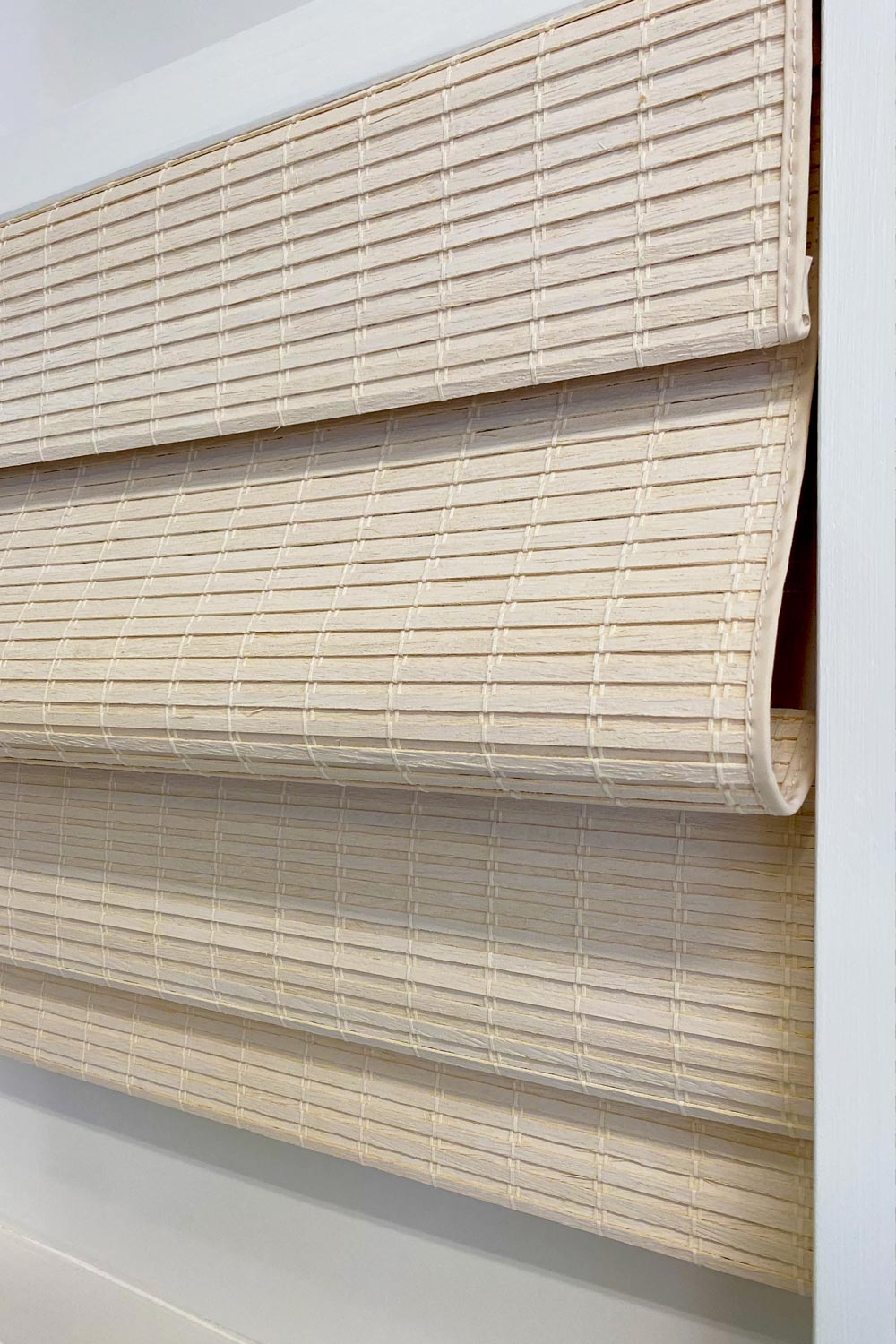
Weave Blinds
Not all weave blinds should be cleaned in exactly the same way.
The best way to clean a weave blind depends on what it is made from. Natural woven materials such as bamboo, jute and reed can require different care from synthetic woven fabrics, so start with gentle dust removal and always check the care instructions for the specific blind.
Avoid soaking natural woven materials, scrubbing textured surfaces aggressively or using household sprays unless recommended by the manufacturer. Don’t assume every woven blind can be spot-cleaned with water, and avoid abrasive cloths that may disturb the surface.
If the manufacturer’s instructions allow you to test a cleaning product, always try it on a small, inconspicuous area first rather than applying it directly to a visible section.

Don’t forget the headrail and operating components
Cleaning the visible part of the blind is only half the job.
Dust can also accumulate around:
- Headrails
- Tracks
- Chains
- Cords
- Bottom rails
- Window frames
- Sills
Use a soft brush or dry microfibre cloth to remove loose dust from these areas. Be careful around chains, cords and operating mechanisms. Do not flood them with water or cleaning solution. If a mechanism feels stiff, catches or stops operating normally, cleaning alone may not solve the problem. Forcing it can potentially cause further damage.
Frequently Asked Questions
How often should you clean your blinds?
It depends on your home and how much dust, pollen and outdoor debris your blinds are exposed to. Lightly dusting them every few weeks can help prevent heavy build-up, with a more thorough clean when needed. After a particularly dusty period, pay extra attention to blinds near frequently used windows and doors.
What should you not use to clean blinds?
Avoid bleach, strong chemical cleaners, abrasive scourers, rough brushes, excessive water and high-pressure cleaning unless the manufacturer specifically recommends them. Soaking or aggressively scrubbing blinds can also damage fabrics, coatings, finishes and other materials. Always check the manufacturer’s care instructions first.
How do you remove mould or stubborn stains from blinds?
Mould, grease and stubborn stains may require a different approach from ordinary dust and marks. Avoid scrubbing harder or applying stronger chemicals without checking that they are suitable for the blind material. Some fabric blinds may require specialist cleaning, while certain hard surfaces can tolerate appropriate cleaning products. If you’re unsure, seek professional advice rather than risk damaging the blind.
Keep your blinds looking their best beyond summer
Knowing how to clean blinds is less about finding one universal cleaning product and more about understanding what your particular blind is made from.
A gentle approach, regular dust removal and the correct care method can help keep blinds looking cleaner without unnecessarily exposing fabrics, coatings or finishes to harsh products. For homes around the Hawkesbury, where dust can become particularly noticeable after a dry summer, adding blind cleaning to your regular home maintenance routine can be a worthwhile job.
If your blinds have stubborn stains, damaged fabric, a faulty mechanism or specific care requirements, Stylecraft & Co. can help you choose the right approach before you risk causing further damage.