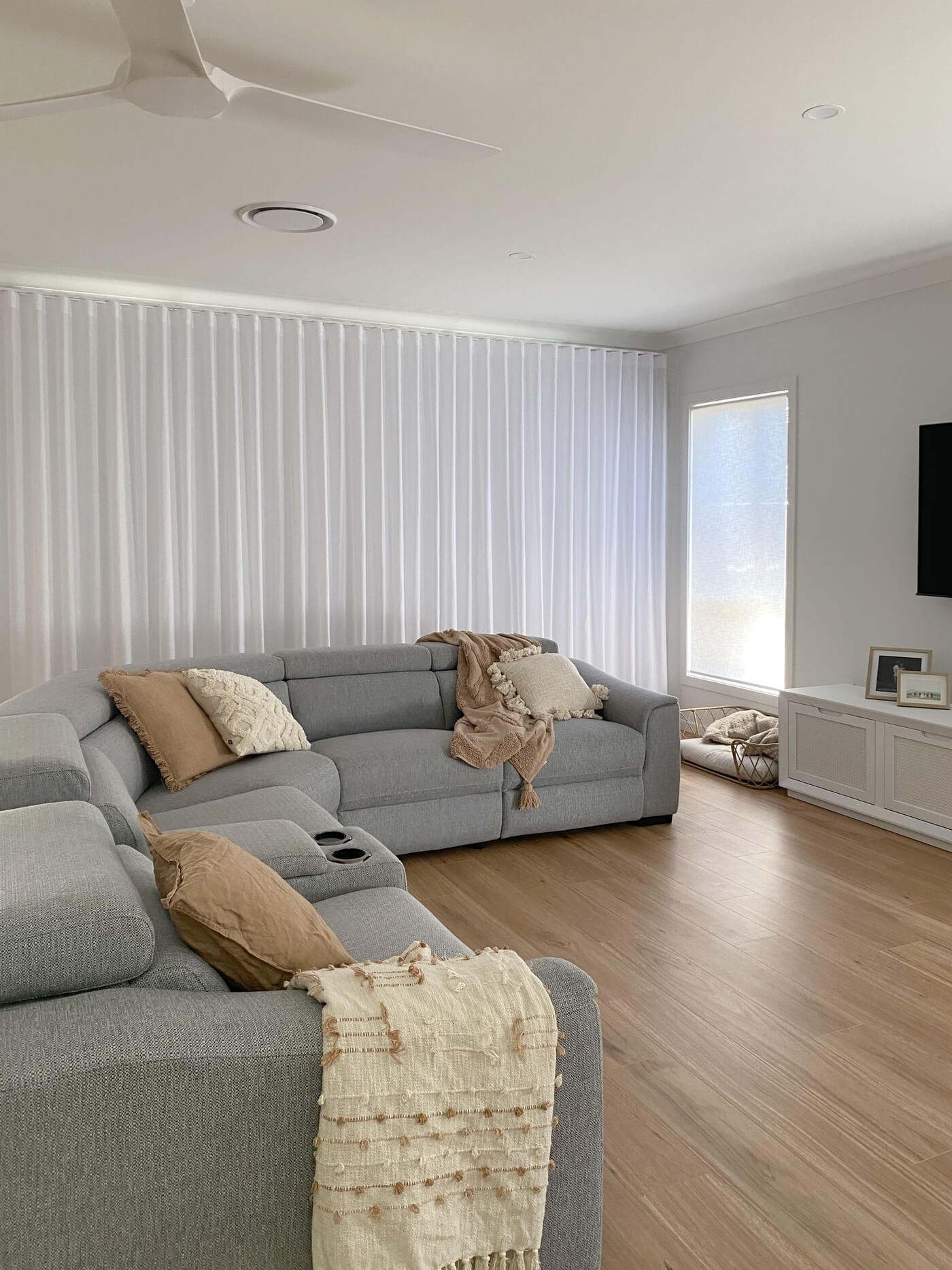
How to Stop Afternoon Sun Heating Up Your Living Room

Afternoon sun can make a living room uncomfortably hot, particularly when large windows face west or north-west and receive direct sunlight during the warmest part of the day. Even with the air conditioning running, heat entering through the glass can make it difficult to maintain a comfortable indoor temperature. The most effective way to manage this heat is to reduce how much sunlight enters through your windows. The right blinds, curtains or external shading can help reduce solar heat gain, cut glare and make your living room more comfortable through summer.

Why Does Your Living Room Get So Hot?

When sunlight passes through the glass, it heats your floors, furniture and other surfaces, pushing up the room temperature. West-facing windows are often the biggest culprit because they take the brunt of the afternoon sun, especially during warmer months.

A few things can make the problem worse:

  • Window direction: West-facing windows often cop the strongest afternoon sun.
  • Large windows and sliding doors: More glass means more opportunity for sunlight to heat your living space.
  • Lightweight curtains or blinds: They may give you privacy but might not do enough to manage the heat.
  • Limited outdoor shade: Without trees, awnings or other shading, direct sunlight can hit your windows for hours.

Which Blinds Are Best for Blocking Afternoon Sun?

Afternoon sun can make a room uncomfortably hot and cause glare on your TV or screens. The right blinds can help control harsh sunlight, reduce glare and improve comfort without making the room feel dark.
Sunscreen roller blinds filter sunlight while maintaining some outside visibility. They can be useful in living rooms where you want to watch television, work near a window or enjoy daylight without the full intensity of direct sun. Keep in mind that the fabric’s openness and colour affect how much light and heat get through, so choose a fabric suited to your room’s sun exposure.
Blog Rollers 01 | Stylecraft &Amp; Co Richmond
Blog Rollers 02 | Stylecraft &Amp; Co Richmond
Blog Rollers 03 | Stylecraft &Amp; Co Richmond

2. Blockout roller blinds

If the afternoon sun makes your living room too bright, blockout roller blinds offer stronger light control. Their opaque fabric prevents most visible light from passing through the covered area, making them suitable for rooms where you want greater control over sunlight. For better heat control, consider the fabric’s thermal performance and how closely the blind fits the window. Light control and heat reduction aren’t quite the same thing.

3. Double roller blinds

Double roller blinds combine two separate fabrics, commonly a sunscreen blind and a blockout blind, on one window. This allows you to filter daylight during the day and use the blockout fabric when the afternoon sun becomes too strong. They are worth considering for living rooms with changing light conditions.

4. Cellular and pleated blinds

Cellular blinds use a honeycomb-shaped structure that creates insulating air pockets. Depending on their construction and installation, these can help reduce heat transfer through windows. Pleated blinds offer a different fabric-based window covering, with their performance depending on the fabric, lining and fit. If reducing heat is your main concern, compare the specifications before choosing.

5. Layered blinds and curtains

Sometimes, one window covering isn’t enough. Pairing blinds with curtains gives you greater flexibility with light, privacy and the overall look of your living room. The right combination depends on your windows, sun exposure and interior style. Choose fabrics and colours that work together, so your window furnishings feel like part of the room rather than an afterthought.

Stay Cool Without Extra Air Conditioning

  • Close blinds early: Block direct sunlight before it heats the room.
  • Choose suitable fabrics: Lighter colours and the right backing can help reduce heat.
  • Add external shading: Awnings and shutters help block sunlight before it reaches the glass.
  • Ventilate at the right time: Open windows when outdoor air is cooler.
  • Reduce indoor heat: Limit cooking and heat-producing appliances during hot afternoons.

Keep Summer Heat Out With the Right Blinds

The best blinds for reducing heat depend on which way your windows face, how much direct sunlight they receive and how you use the room. A west-facing living room that heats up every afternoon may need block out blinds or double roller blinds, while sunscreen blinds can help reduce glare while keeping your outdoor view. Before choosing your blinds, consider the fabric’s solar performance, how well the blinds cover the window, and how much light and privacy you want. Colour, style and ease of operation matter too, but the main thing is choosing a solution that suits your windows and the way you live.

At Stylecraft & Co., we can help you compare fabrics and options to find the right balance of heat control, natural light and style for your home. Drop into our North Richmond showroom at 5 Terrace Road to see the blind fabrics up close, compare colours and backing options, and talk through which choices make sense for your home’s afternoon sun.